The Truth About Eye Drops: Which Ones Actually Help Dry Eyes
If you’re experiencing dry, irritated eyes, you’re not alone. Millions of people seek relief through eye drops, but with countless options on drugstore shelves, how do you know which ones actually work? Our comprehensive guide reveals the truth about the best eye drops for dry eyes, helping you make informed decisions about your eye health.
Understanding Dry Eye Disease: More Than Just Discomfort
Dry eye disease (DED) affects approximately 16 million diagnosed Americans. According to the 2024 Dry Eye Report, practitioners estimate that 67.55% of patients have some form of DED, with about 46.38% receiving a formal diagnosis. Recent industry reports suggest the total number experiencing symptoms could be as high as 20 million Americans.
This multifactorial condition occurs when your eyes don’t produce enough tears, produce poor-quality tears, or experience excessive tear evaporation.
The Three Types of Dry Eye Disease
The condition involves three critical components:
- Tear production deficiency (aqueous-deficient dry eye)
- Rapid tear evaporation (evaporative dry eye/meibomian gland dysfunction)
- Mixed dry eye (combination of both factors)
Understanding your specific type of dry eye is crucial for selecting the most effective treatment, including the right eye drops.
The Science Behind Effective Eye Drops
How Eye Drops Work for Dry Eyes
Artificial tears, the most common type among the best eye drops for dry eyes, work by supplementing your natural tear film with lubricating ingredients that:
- Restore moisture to the ocular surface
- Stabilize the tear film to prevent rapid evaporation
- Reduce inflammation that contributes to dry eye symptoms
- Provide protective coating for damaged eye surfaces
Recent 2024 research shows that the most effective eye drops target specific tear film deficiencies rather than providing generic lubrication.
Key Active Ingredients That Actually Work
Proven Effective Ingredients:
- Glycerine: This lubricating ingredient has the added properties of promoting epithelial cell growth and blunting the damaging effects of extra-salty tears (high osmolarity). This is what Dr. Mark suggests for most patients
- Hyaluronic Acid/Sodium Hyaluronate: Provides long-lasting hydration and helps retain moisture
- Carboxymethylcellulose (CMC): Creates a protective gel-like coating
- Polyethylene Glycol: Primary moisturizing agent
- Propylene Glycol: Enhances spreadability and lubrication
- Electrolytes (potassium, sodium): Support healthy tear film composition
Lipid-Based Ingredients for Evaporative Dry Eye:
- Castor Oil: Helps restore the lipid layer of tears
- Mineral Oil: Reduces tear evaporation
- Flaxseed Oil: Contains omega-3 fatty acids for meibomian gland health
The Best Eye Drops for Dry Eyes: 2025 Evidence-Based Recommendations
Top Over-the-Counter Options
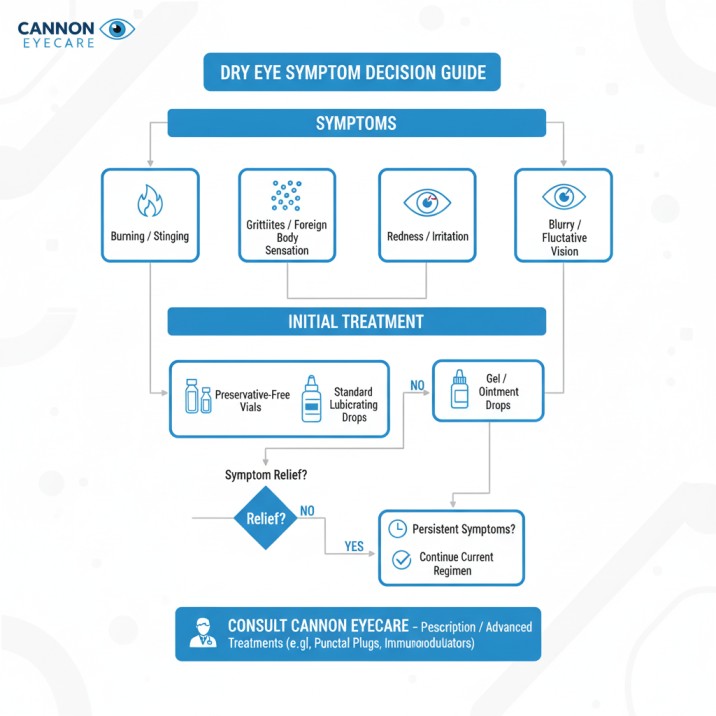
1. Preservative-Free Artificial Tears
Best for: Daily use, sensitive eyes, frequent application
Top Picks:
- Oasis Tears: Glycerine based (see above)
- Biotrue Hydration Boost Eye Drops: Also glycerine-based
- Systane Complete PF: Features nano-droplet technology for up to 8 hours of relief
- Refresh Optive Preservative-Free: Single-use vials, ideal for post-surgery or severe dry eye.
- TheraTears: Hypotonic formula with electrolytes, suitable for mild to moderate dryness
Why They Work: Preservative-free formulas avoid potential irritation from chemicals like benzalkonium chloride, making them safer for frequent use (more than 4 times daily).
2. Gel-Based Drops for Extended Relief
Best for: Severe dry eye, overnight use
Top Picks:
- Systane Gel Drops: Provides up to 8 hours of protection
- GenTeal Gel: Thick formulation for long-lasting lubrication
Important Note: Gel drops may temporarily blur vision for 10-15 minutes after application, making them ideal for bedtime use.
3. Lipid-Based Drops for Meibomian Gland Dysfunction
Best for: Evaporative dry eye, rapid tear evaporation
Top Picks:
- Retaine MGD: Contains omega-3 fatty acids from flaxseed oil
- Refresh Relieva: Targets lipid layer deficiency
Breakthrough Prescription Options
1. Miebo (Perfluorohexyloctane)
- FDA Approved: May 2023
- How It Works: Acts as a protective “blanket” over the tear film, preventing evaporation
- Clinical Results: GOBI and MOJAVE studies showed a significant reduction in dry eye signs and symptoms
2. Vevye (Cyclosporine 0.1%)
- FDA Approved: 2024
- Unique Approach: Water-free formulation using perfluorobutylpentane vehicle
- Best For: Patients seeking improved bioavailability compared to traditional cyclosporine formulations
3. Tyrvaya (Varenicline Nasal Spray)
- FDA Approved: October 2021
- Unique Approach: First nasal spray for dry eye – targets tear production through trigeminal nerve stimulation
- Best For: Patients seeking an alternative to eye drops or those with dexterity issues
4. Traditional Prescription Options
- Restasis (Cyclosporine): Reduces inflammation and increases natural tear production
- Xiidra (Lifitegrast): Targets inflammatory proteins on the eye surface
- Cequa (Cyclosporine): Higher concentration of cyclosporine for severe cases
What Makes Eye Drops Ineffective: Common Mistakes
The Preservative Problem
Many people experience worsening dry eye symptoms when using preserved drops too frequently. Preservatives like benzalkonium chloride can:
- Damage the delicate ocular surface
- Cause staining and irritation
- Create a cycle of dependency where the eyes become redder without drops
Solution: Switch to preservative-free options if using drops more than 4 times daily.
Wrong Drop Type for Your Condition
Using anti-redness drops for dry eyes can actually worsen the condition through:
- Rebound redness: Blood vessels dilate more after the medication wears off
- Masked symptoms: Temporary cosmetic improvement without addressing underlying causes
- Potential dependency: Eyes may become reliant on the vasoconstrictor effects
Ignoring Underlying Causes
Eye drops provide symptom relief but don’t address root causes like:
- Meibomian gland dysfunction (86% of dry eye cases)
- Environmental factors
- Medication side effects
- Underlying autoimmune conditions
Dry Eye Seattle: Local Environmental Considerations
Living in Seattle presents unique challenges for dry eye sufferers seeking the best eye drops for dry eyes:
Environmental Factors
- Indoor heating during long winters reduces humidity
- Air conditioning in summer further dehydrates the eyes
- Screen time increases due to tech industry prevalence
- Marine climate changes can affect tear stability
Lifestyle Impacts
- Extended computer work is common in Seattle’s tech hub
- Coffee consumption (caffeine can reduce tear production)
- Outdoor activities in variable weather conditions
Recent Scientific Breakthroughs in Dry Eye Treatment
2024 Research Highlights
Study 1: Nanotechnology in Eye Drop Delivery Recent research published in International Ophthalmology (February 2024) demonstrates that nano-droplet technology significantly improves medication delivery to ocular tissues, leading to longer-lasting relief and reduced dosing frequency.
Study 2: Multidimensional Immunotherapy Approaches A comprehensive review in Frontiers in Ophthalmology (October 2024) reveals that targeting multiple inflammatory pathways simultaneously provides superior outcomes compared to single-agent therapy.
Study 3: Perfluorohexyloctane Clinical Trials. The GOBI and MOJAVE Phase 3 trials (presented at ARVO 2024) demonstrated that perfluorohexyloctane provides significant improvements in both signs and symptoms across diverse patient populations with varying dry eye severity.
How to Choose the Best Eye Drops for Dry Eyes: A Step-by-Step Guide
Step 1: Identify Your Dry Eye Type
Evaporative Dry Eye Signs:
- Eyes feel dry despite visible tearing
- Symptoms worsen in air conditioning or wind
- Morning eye irritation
- Meibomian gland dysfunction
Aqueous-Deficient Dry Eye Signs:
- Consistently dry, gritty feeling
- Reduced tear production
- Associated with autoimmune conditions
- Medication-induced dryness
Step 2: Consider Usage Frequency
- 1-3 times daily: Preserved drops may be acceptable
- 4+ times daily: Preservative-free essential
- Severe symptoms: Consider gel formulations or prescription options
Step 3: Evaluate Special Circumstances
Contact Lens Wearers:
- Choose contact-safe formulations
- Apply drops before lens insertion
- Consider rewetting drops during wear
Post-Surgery Recovery:
- Preservative-free drops exclusively
- Follow the surgeon’s specific recommendations
- Expect 3-6 months of temporary dryness
Advanced Treatment Options Beyond Eye Drops
In-Office Procedures
Intense Pulsed Light (IPL) Therapy:
- Targets meibomian gland dysfunction
- Reduces inflammatory markers
- FDA-approved OptiLight device shows significant improvement
Punctal Plugs:
- Block tear drainage to retain natural tears
- Reversible treatment option
- Effective for aqueous-deficient dry eye
Emerging Technologies
- Thermal pulsation therapy for meibomian glands
- Clears blocked oil glands
- Provides lasting improvement
Radiofrequency Treatment:
- Stimulates collagen production
- Improves eyelid function
- Newer monopolar devices show enhanced results
When Eye Drops Aren’t Enough: Red Flags
Seek Professional Evaluation If:
- Symptoms persist despite 2-3 weeks of consistent OTC drop use
- Sudden onset of severe dry eye
- Associated pain, vision changes, or light sensitivity
- Signs of infection (discharge, extreme redness)
- Underlying autoimmune conditions
Comprehensive Dry Eye Evaluation
Modern dry eye diagnosis involves:
- Tear osmolarity testing (normal: ~302 mOsm/L)
- MMP-9 inflammation testing (InflammaDry)
- Meibomian gland imaging
- Tear breakup time assessment
Cost-Effective Strategies for Long-Term Management: Finding the Best Eye Drops for Dry Eyes
Budget-Friendly Options
Generic Artificial Tears:
- Refresh Tears: $7-15 per bottle (varies by retailer)
- Systane Ultra: $15-25 per bottle (10mL)
- Systane Complete: $18-21 per bottle (10mL)
- Store brands: Often 30-50% less expensive
Prescription Savings:
- Generic cyclosporine availability has significantly reduced costs
- Insurance coverage varies widely
- Patient assistance programs are available for newer medications
Value Considerations
Cost per Use Analysis:
- Preservative-free single vials: $0.50-1.00 per use, but safer for frequent use
- Multi-dose bottles: $0.10-0.25 per use for occasional use
- Prescription drops: $2-8 per day, but may reduce the need for multiple OTC products
Professional Recommendations: What Eye Doctors Actually Prescribe
Most Recommended Brands by Ophthalmologists
Based on 2024 surveys of eye care professionals treating dry eye Seattle patients and nationwide:
- Systane line products (37% of recommendations)
- Refresh product family (28% of recommendations)
- TheraTears (15% of recommendations)
- Preservative-free options (preferred by 78% for frequent users)
Prescription Patterns
Recent data shows increasing prescription of:
- Combination therapies (prescription + OTC)
- Targeted treatments based on specific dry eye testing
- Compounded formulations for complex cases
Practical Application: Daily Management Strategies
Morning Routine
- Apply preservative-free artificial tears upon waking
- Use warm compresses for 5-10 minutes (if MGD present)
- Gentle eyelid massage to express meibomian glands
Workday Management
- Follow the 20-20-20 rule for screen time
- Position screens below eye level
- Use a humidifier in dry office environments
- Apply drops every 2-4 hours as needed
Evening Protocol
- Remove makeup completely
- Apply gel drops before bed for overnight relief
- Consider bedtime ointments for severe cases
The Future of Dry Eye Treatment
Emerging Therapies on the Horizon
Nanotechnology Applications:
- Targeted drug delivery systems
- Extended-release formulations
- Reduced dosing frequency
Biologics and Advanced Therapeutics:
- Autologous serum eye drops
- Amniotic membrane-derived treatments
- Stem cell therapies
- Microfluidic delivery systems
- Real-time tear monitoring
- Automated medication dispensing
Resources and Scientific Citations
This comprehensive guide is based on current medical research and clinical evidence. Below are three key scientific sources that support the recommendations in this article:
1. 2024 Dry Eye Disease Treatment Pipeline Research
Source: Review of Ophthalmology – “Reviewing the Dry Eye Treatment Pipeline” (June 2024)
Link: https://www.reviewofophthalmology.com/article/reviewing-the-dry-eye-treatment-pipeline
Key Finding: Analysis of Phase III clinical trials for emerging dry eye treatments, including Reproxalap studies showing statistically significant reduction in ocular redness and improved Schirmer scores in controlled adverse environment testing.
2. GOBI and MOJAVE Clinical Trial Results for Perfluorohexyloctane
Source: American Journal of Ophthalmology – “NOV03 for Dry Eye Disease Associated with Meibomian Gland Dysfunction” (December 2022)
Link: https://www.aaojournal.org/article/S0161-6420(22)01016-8/fulltext
Key Finding: Pivotal Phase 3 trials demonstrating that perfluorohexyloctane (Miebo) significantly reduced dry eye signs and symptoms in patients with meibomian gland dysfunction, supporting FDA approval for the first treatment directly targeting tear evaporation.
3. Multidimensional Immunotherapy Approaches to Dry Eye Disease
Source: Frontiers in Ophthalmology – “Multidimensional immunotherapy for dry eye disease: current status and future directions” (October 2024)
Link: https://www.frontiersin.org/journals/ophthalmology/articles/10.3389/fopht.2024.1449283/full
Key Finding: Comprehensive review of emerging immunotherapies, including biologics, stem cell therapy, and nanotechnology approaches, demonstrating that targeting multiple inflammatory pathways simultaneously provides superior outcomes compared to single-agent therapy.
These sources represent peer-reviewed research that informs current best practices in dry eye treatment. For the most current medical advice, always consult with qualified eye care professionals.
Conclusion: Making Informed Choices About the Best Eye Drops for Dry Eyes
The truth about the best eye drops for dry eyes is nuanced: effectiveness depends on matching the right formulation to your specific type of dry eye, usage frequency, and individual circumstances. While over-the-counter artificial tears provide relief for many, the landscape of dry eye Seattle treatment has evolved significantly with new prescription options and advanced diagnostic techniques.
Key takeaways for effective dry eye management:
- Preservative-free formulations are essential for frequent use
- Type-specific treatment (evaporative vs. aqueous-deficient) improves outcomes
- Professional evaluation guides optimal treatment selection
- Combination approaches often yield better results than single treatments
- Newer prescription options offer breakthrough relief for severe cases
Remember that dry eye is a chronic condition requiring ongoing management rather than a quick fix. Working with experienced eye care professionals who understand the complexity of this condition ensures you receive the most appropriate and effective treatment.
Expert Eye Care in Seattle
At Cannon EyeCare, we understand that dry eye affects each patient differently. Our comprehensive approach combines the latest diagnostic technology with personalized treatment plans that may include the newest prescription drops, advanced procedures, and lifestyle modifications tailored to Seattle’s unique environment.
Locations:
- University Village: Convenient parking and state-of-the-art diagnostic equipment
- Pike Place Market: Central location with comprehensive dry eye services
Our experienced team stays current with the latest developments in dry eye treatment, ensuring you receive evidence-based care with the warmth and attention that sets us apart in Seattle’s eye care community.
Ready to find relief from dry eyes? Contact Cannon EyeCare today to schedule your comprehensive dry eye evaluation.
FAQs
-
Lubricating “artificial tears” without redness relievers work best for true dry eye relief, especially preservative‑free formulas used several times a day as needed.