How Your Eyes Can Reveal Signs of Other Health Conditions
Introduction: Your Eyes Are Windows to Your Overall Health
When you think about preventive healthcare, annual physicals and blood tests likely come to mind. But did you know that a comprehensive medical eye exam can reveal critical information about your overall health that might otherwise go undetected for years?
At Cannon EyeCare in Seattle’s University Village, we take a holistic approach to eye health and systemic health that goes far beyond simply checking your vision. Our state-of-the-art medical eye exams can detect early signs of diabetes, hypertension, autoimmune diseases, and even certain cancers—often before you experience any symptoms.
This comprehensive guide explores how eye health and systemic health are intrinsically connected, why medical eye exams are essential for everyone (even those with perfect vision), and what specific health conditions your eyes might reveal during your next appointment.
The Science Behind Eye Health and Systemic Health Connections
Why Your Eyes Reveal So Much About Your Health
Your eyes offer a unique window into your body’s overall health status for several compelling reasons. Unlike other organs, the eyes allow healthcare providers to directly observe blood vessels, nerves, and tissues without invasive procedures. This transparency makes comprehensive eye examinations incredibly valuable for detecting systemic health issues.
The retina, located at the back of your eye, contains the only blood vessels in your body that can be viewed directly. These delicate vessels reflect the health of your cardiovascular system, while the optic nerve provides insights into neurological function. When disease affects your body, these structures often show early warning signs that trained eye care professionals can identify during routine examinations.
The Connection Between Eye Health and Systemic Health
Recent advances in medical technology have strengthened our understanding of how eye health and systemic health are interconnected. Modern diagnostic equipment allows eye doctors to detect microscopic changes that may indicate developing health conditions, often years before traditional symptoms appear.
This connection is vital for conditions like diabetes and hypertension, which can cause significant damage throughout the body while remaining largely asymptomatic in their early stages. Regular medical eye exams provide an opportunity for early intervention that can prevent serious complications and preserve both vision and overall health.
10 Major Health Conditions Your Eyes Can Reveal
1. Diabetes and Diabetic Retinopathy
What Eye Doctors See: Small blood vessel leakage, retinal bleeding, swelling of the macula, and formation of new, abnormal blood vessels in the retina.
Why This Matters: Diabetic retinopathy is the leading cause of vision loss in adults aged 20-74 years, but it often develops without noticeable symptoms. Recent 2023 CDC data show that 9.6 million Americans (26.4% of those with diabetes) had diabetic retinopathy in 2021, with 1.84 million having vision-threatening forms. An eye examination can detect diabetes even before blood sugar tests show elevated levels, providing crucial opportunities for early intervention.
Early Warning Signs:
- Tiny red spots (microaneurysms) in the retina
- Yellow deposits (hard exudates) indicate protein and lipid leakage
- Cotton wool spots showing nerve fiber damage
- Retinal swelling or fluid accumulation
Action Steps: If eye doctors detect signs of diabetes, immediate referral to a primary care physician for blood glucose testing and diabetes management is essential. Early treatment can prevent progression to vision-threatening stages.
2. High Blood Pressure (Hypertension)
What Eye Doctors See: Narrowed, twisted, or leaking blood vessels in the retina, along with swelling of the optic nerve in severe cases.
Why This Matters: High blood pressure often has no symptoms until it reaches dangerous levels. Eye examinations can reveal hypertensive retinopathy, allowing for early blood pressure management that prevents heart attacks, strokes, and kidney damage.
Early Warning Signs:
- Arteriovenous nicking (where arteries cross and compress veins)
- Silver wire appearance of retinal arteries
- Flame-shaped retinal hemorrhages
- Papilledema (optic nerve swelling)
Action Steps: Immediate referral to primary care for blood pressure monitoring and cardiovascular risk assessment. Lifestyle modifications and medication can prevent serious complications when detected early.
3. High Cholesterol and Cardiovascular Disease
What Eye Doctors See: Cholesterol deposits around the eyelids (xanthelasma), corneal arcus (gray-white rings around the cornea), and retinal artery blockages or emboli.
Why This Matters: High cholesterol significantly increases the risk of heart disease and stroke. Eye examinations can detect cholesterol-related changes that indicate the need for lipid management and cardiovascular screening.
Early Warning Signs:
- Arcus senilis (corneal cholesterol rings) in patients under 60
- Yellow, raised bumps on eyelids
- Bright plaques are visible in retinal blood vessels
- Retinal artery occlusions from cholesterol emboli
Action Steps: Lipid panel testing, cardiovascular risk assessment, and consultation with cardiology if significant findings are present.
4. Autoimmune Diseases
What Eye Doctors See: Inflammation of various eye structures, including the iris (iritis), the optic nerve (optic neuritis), and the blood vessels (vasculitis).
Why This Matters: Many autoimmune conditions, including multiple sclerosis, rheumatoid arthritis, and lupus, can first manifest with eye symptoms. Early detection allows for prompt treatment that can prevent permanent damage.
Early Warning Signs:
- Optic neuritis causes vision loss and eye pain
- Recurrent iritis with eye redness and light sensitivity
- Retinal vasculitis with areas of retinal bleeding
- Dry eye symptoms from autoimmune tear gland dysfunction
Action Steps: Referral to rheumatology or neurology for comprehensive autoimmune evaluation and specific diagnostic testing.
5. Thyroid Disease
What Eye Doctors See: Bulging eyes (exophthalmos), double vision, difficulty closing eyelids completely, and inflammation of eye muscles and tissues.
Why This Matters: Thyroid eye disease, particularly associated with Graves’ disease, can cause permanent vision changes if not treated promptly. Eye symptoms often appear before other thyroid-related symptoms become apparent.
Early Warning Signs:
- Proptosis (forward displacement of the eyes)
- Restrictive eye muscle movement
- Eyelid retraction or lag
- Corneal exposure from inadequate eyelid closure
Action Steps: Thyroid function testing and endocrinology consultation for comprehensive thyroid management and eye-specific treatments.
6. Multiple Sclerosis and Neurological Conditions
What Eye Doctors See: Optic nerve inflammation, pale optic nerves indicating previous damage, and abnormal eye movement patterns.
Why This Matters: Optic neuritis is often the first symptom of multiple sclerosis, occurring in up to 50% of patients with this condition during their disease course. Around 20% of MS patients have optic neuritis as their initial presentation. Early detection can lead to prompt neurological evaluation and disease-modifying treatments.
Early Warning Signs:
- Sudden vision loss in one eye
- Eye pain that worsens with movement
- Color vision changes
- Visual field defects
Action Steps: Urgent neurological referral for MRI imaging and comprehensive neurological assessment, particularly if multiple symptoms are present.
7. Stroke Risk and Cerebrovascular Disease
What Eye Doctors See: Retinal artery occlusions, cotton wool spots, and other signs of compromised blood flow that may indicate increased stroke risk.
Why This Matters: The retinal blood vessels mirror those in the brain. Changes in retinal circulation can indicate cerebrovascular disease and elevated stroke risk, allowing for preventive interventions.
Early Warning Signs:
- Branch or central retinal artery occlusions
- Retinal emboli (visible cholesterol or platelet plugs)
- Areas of retinal infarction
- Abnormal blood vessel formation
Action Steps: Immediate evaluation by primary care or neurology for stroke risk assessment and potential preventive treatments.
8. Certain Cancers
What Eye Doctors See: Unusual growths on the eyelid, changes in iris color or shape, retinal lesions, and swelling of the optic nerve from increased pressure.
Why This Matters: Several types of cancer can first manifest in the eye, including melanoma, breast cancer metastases, and brain tumors. Early detection dramatically improves treatment outcomes.
Early Warning Signs:
- New or changing pigmented lesions in the eye
- Persistent bumps on the eyelids that don’t heal
- Sudden vision changes with neurological symptoms
- Retinal detachment without an obvious cause
Action Steps: Referral to oncology or specialized ophthalmic oncology services for tissue biopsy and comprehensive cancer screening.
9. Liver Disease
What Eye Doctors See: Yellow discoloration of the sclera (whites of the eyes) and skin around the eyes, indicating jaundice from liver dysfunction.
Why This Matters: Jaundice visible in the eyes often appears before it’s noticeable in the skin, providing early warning of liver problems that require immediate attention.
Early Warning Signs:
- Scleral icterus (yellowing of the whites)
- Yellowish discoloration around the eyes
- Changes in pupil response in advanced liver disease
Action Steps: Immediate referral for liver function testing and gastroenterology evaluation to determine the cause and extent of liver dysfunction.
10. Sleep Disorders and Metabolic Conditions
What Eye Doctors See: Swollen optic nerves from increased intracranial pressure, often associated with sleep apnea and obesity.
Why This Matters: Conditions like sleep apnea can cause papilledema (optic nerve swelling), which may lead to permanent vision loss if untreated. This connection highlights the importance of comprehensive health screening.
Early Warning Signs:
- Papilledema with vision changes
- Visual field defects
- Chronic morning headaches with vision symptoms
Action Steps: Sleep study evaluation and assessment for metabolic syndrome, with appropriate subspecialty referrals based on findings.
The Advanced Technology Behind Modern Medical Eye Exams
State-of-the-Art Diagnostic Equipment
Modern medical eye exams utilize sophisticated technology that dramatically enhances our ability to detect health conditions early. At Cannon EyeCare, we employ several advanced diagnostic tools that provide detailed insights into both eye health and systemic health.
Optical Coherence Tomography (OCT) creates high-resolution cross-sectional images of the retina, allowing detection of microscopic changes that might indicate diabetes, hypertension, or neurological conditions. This technology can identify tissue changes as small as a few micrometers, providing unprecedented diagnostic precision.
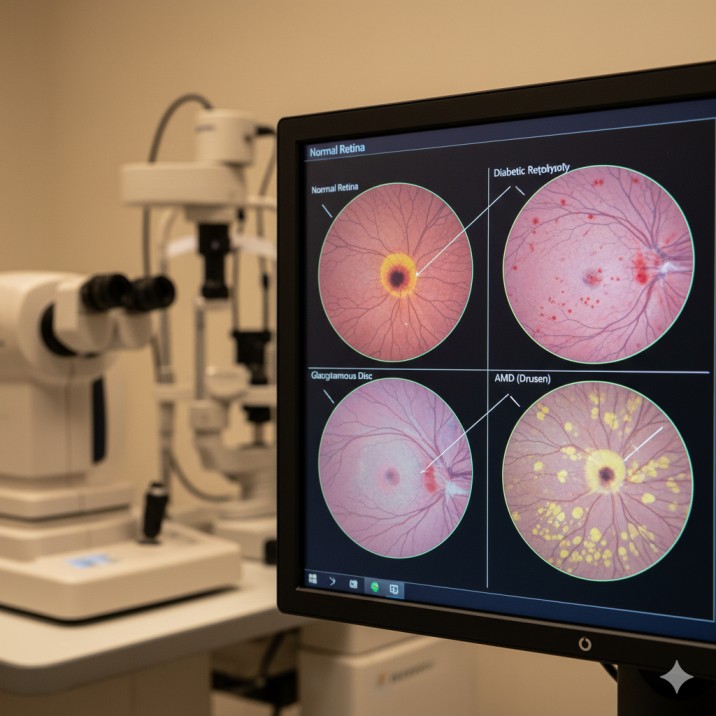
Digital Retinal Photography captures detailed images of the retina, optic nerve, and blood vessels. These high-resolution images can be compared over time to track changes and shared with other healthcare providers for comprehensive care coordination.
Automated Visual Field Testing evaluates peripheral vision and can detect subtle changes that might indicate glaucoma, neurological conditions, or other health issues affecting the visual pathway.
Artificial Intelligence in Eye Health Screening
The integration of AI technology in 2025 has revolutionized medical eye exams. AI algorithms can now analyze retinal images to detect diabetic retinopathy, age-related macular degeneration, and other conditions with remarkable accuracy, often identifying changes that might be missed by human observation alone.
This technology enhances rather than replaces the expertise of skilled eye doctors, providing an additional layer of diagnostic precision that improves patient outcomes and enables earlier intervention for systemic health conditions.
The Evidence Behind Eye-Health Connections
Scientific Foundation for Eye-Based Health Detection
The connection between eye health and systemic diseases is well-established in medical literature. The retina contains the only blood vessels in the body that can be viewed directly without invasive procedures, making it a unique window into vascular health throughout the body.
Recent studies published in 2023 by the CDC’s Vision Health Initiative found that diabetic retinopathy affects 26.4% of Americans with diabetes, with the condition often detectable before blood glucose tests show abnormal results. This demonstrates the power of comprehensive eye examinations for early disease detection.
Research consistently shows that up to 50% of patients with multiple sclerosis experience optic neuritis at some point during their disease course, with 20% having it as their initial presentation. This makes eye examinations particularly valuable for early neurological screening.
The integration of artificial intelligence in retinal imaging has further enhanced our ability to detect systemic health conditions through eye examinations, with AI algorithms now capable of identifying early signs of cardiovascular disease and diabetes with remarkable accuracy.
What to Expect During Your Comprehensive Medical Eye Exam
The Complete Examination Process
A thorough medical eye exam goes far beyond basic vision testing. Understanding what to expect helps ensure you receive the most comprehensive care possible and maximizes the health benefits of your examination.
Initial Health History Review includes discussion of your medical history, family health background, current medications, and any symptoms you may be experiencing. This information helps guide the examination and identifies potential risk factors for systemic health conditions.
External Eye Examination evaluates the eyelids, surrounding skin, and eye movement patterns. This portion of the exam can reveal signs of thyroid disease, neurological conditions, and certain cancers that may first appear around the eyes.
Pupil Response Testing assesses how your pupils react to light and accommodation. Abnormal pupil responses can indicate neurological conditions, including potential brain aneurysms or other serious conditions requiring immediate attention.
Intraocular Pressure Measurement screens for glaucoma and can sometimes indicate other health issues. Elevated pressure might also be associated with certain medications or systemic conditions that require management.
Dilated Retinal Examination involves the use of eye drops to enlarge your pupils, allowing comprehensive evaluation of the retina, optic nerve, and internal blood vessels. This is the most critical portion of the examination for detecting systemic health conditions.
Advanced Diagnostic Testing When Indicated
Depending on your health history and initial examination findings, additional testing might be recommended. This could include specialized imaging studies, visual field testing, or color vision assessment that provides additional information about your overall health status.
At Cannon EyeCare, we use state-of-the-art equipment to ensure the most thorough evaluation possible. Our commitment to comprehensive care means we take the time necessary to identify any health concerns that might be revealed through careful eye examination.
Prevention and Early Detection: The Key to Better Health Outcomes
The Importance of Regular Medical Eye Exams
The value of routine eye examinations extends far beyond maintaining good vision. Regular medical eye exams provide a unique opportunity for early detection of serious health conditions, often before symptoms develop or other screening methods reveal problems.
For many systemic health conditions, early detection through eye examinations can literally be life-saving. Conditions like diabetes, hypertension, and autoimmune diseases often cause irreversible damage before symptoms become apparent. Eye examinations provide a non-invasive window into your health that can guide preventive care and early intervention.
Recommended Examination Frequency
The American Academy of Ophthalmology recommends comprehensive eye examinations based on age: under 40 years (every 5-10 years), 40-54 years (every 2-4 years), 55-65 years (every 1-3 years), and over 65 years (every 1-2 years).
However, the systemic health benefits of eye examinations suggest that younger adults might also benefit from more regular screenings, particularly those with family histories of diabetes, cardiovascular disease, or autoimmune conditions.
Taking Action on Eye Examination Findings
When your eye examination reveals signs of potential systemic health conditions, prompt follow-up with appropriate healthcare providers is essential. Your eye doctor will provide specific recommendations for additional testing or specialist consultations based on the examination findings.
The key is to view your eye doctor as an integral part of your healthcare team, working together with your primary care physician and other specialists to maintain your overall health and wellbeing.
Why Choose Cannon EyeCare for Your Medical Eye Exams
Comprehensive Care with Midwestern Values
At Cannon EyeCare, we bring together the latest in medical eye examination technology with the personal attention and care that reflects our Midwestern values. Our approach to medical eye exams emphasizes thorough evaluation, patient education, and seamless coordination with your other healthcare providers.
State-of-the-Art Technology: Our University Village and Pike Place Market locations feature the most advanced diagnostic equipment available, ensuring comprehensive evaluation of both your eye health and indicators of systemic health conditions.
Expert Medical Knowledge: Our experienced optometrists stay current with the latest research in medical eye care and systemic health connections, providing you with the most comprehensive care possible.
Patient-Centered Approach: We take the time to thoroughly explain our findings and work with you to coordinate any necessary follow-up care with other healthcare providers in the Seattle area.
Convenient Seattle Locations: Both our University Village and Pike Place Market locations offer convenient access to comprehensive medical eye care, with easy parking and scheduling that fits your busy lifestyle.
Building Long-Term Health Partnerships
Our commitment extends beyond individual examinations to building long-term partnerships that support your overall health and wellbeing. We maintain detailed records that allow us to track changes over time and provide continuity of care that enhances the early detection benefits of regular eye examinations.
References and Additional Resources
Key Research Citations
1. CDC Vision Health Initiative (2023)
“Prevalence of Diabetic Retinopathy in the US in 2021”
Published in JAMA Ophthalmology
Link: https://www.cdc.gov/vision-health-data/prevalence-estimates/dr-prevalence.html
Key Finding: Study found that 9.6 million Americans (26.4% of those with diabetes) had diabetic retinopathy in 2021, with 1.84 million having vision-threatening forms. This landmark research demonstrates how eye examinations can detect diabetes-related complications before symptoms appear.
2. American Academy of Ophthalmology (2020)
“Comprehensive Adult Medical Eye Evaluation Preferred Practice Pattern”
Link: https://www.aaojournal.org/article/S0161-6420(20)31026-5/fulltext
Key Guidelines: Establishes evidence-based recommendations for eye examination frequency: under 40 years (every 5-10 years), 40-54 years (every 2-4 years), 55-65 years (every 1-3 years), and over 65 years (every 1-2 years). Essential resource for understanding optimal screening schedules.
3. Journal of Translational Medicine (2025)
“From diagnosis to treatment: exploring the mechanisms underlying optic neuritis in multiple sclerosis”
Link: https://translational-medicine.biomedcentral.com/articles/10.1186/s12967-025-06105-1
Key Research: A Comprehensive review showing that up to 50% of multiple sclerosis patients experience optic neuritis during their disease course, with 20% having it as their initial presentation. Demonstrates the critical role of eye examinations in early neurological disease detection.
Additional Professional Resources
- American Academy of Ophthalmology Guidelines: https://www.aao.org/education/guidelines-browse
- CDC Vision Health Surveillance System: https://www.cdc.gov/vision-health-data/
- National Eye Institute: https://www.nei.nih.gov/learn-about-eye-health/eye-conditions-and-diseases
Taking the Next Step: Schedule Your Comprehensive Medical Eye Exam
Don’t Wait for Symptoms
One of the most important messages about medical eye examinations is that waiting for symptoms can mean missing critical opportunities for early intervention. Many of the health conditions that eyes can reveal develop slowly and without obvious symptoms until significant damage has occurred.
Regular comprehensive eye examinations provide proactive health screening that can identify potential problems while they’re still treatable and before they cause irreversible damage to your health or vision.
Making the Appointment
Scheduling your comprehensive medical eye exam at Cannon EyeCare is simple and convenient. Our University Village location provides easy access with ample parking, while our Pike Place Market location offers the convenience of being in the heart of Seattle.
When scheduling, mention any health concerns or family history that might be relevant to your examination. This information helps us prepare for the most comprehensive evaluation possible and ensures we focus on areas of particular concern.
What to Bring to Your Appointment
Come prepared with a list of current medications, your health insurance information, and any previous eye examination records. If you wear glasses or contact lenses, bring them along with any recent prescriptions.
Consider bringing a list of questions about your eye health or any symptoms you may have noticed. Our comprehensive approach means we have time to address your concerns thoroughly and provide the education you need to maintain optimal eye and overall health.
The connection between eye health and systemic health represents one of the most powerful tools available for early disease detection and prevention. Through comprehensive medical eye exams, we can identify signs of diabetes, hypertension, cardiovascular disease, autoimmune conditions, and other serious health issues years before symptoms develop.
At Cannon EyeCare in Seattle, we’re committed to providing the most thorough medical eye examinations possible, utilizing state-of-the-art technology and our expertise to safeguard both your vision and your overall health. Our Midwestern values of thorough care and personal attention ensure that you receive not just an eye examination, but a comprehensive health screening that can guide your preventive care for years to come.
Don’t wait for symptoms to appear. Schedule your comprehensive medical eye exam today and take a proactive step toward protecting your vision and your health. Your eyes truly are windows to your health—let us help you see the complete picture.
Ready to schedule your comprehensive medical eye exam? Contact Cannon EyeCare today at our University Village or Pike Place Market locations. Your vision—and your health—deserve the most comprehensive care possible.
FAQs
-
Yes, eye exams can reveal diabetic retinopathy through retinal blood vessel changes, microaneurysms, and yellow deposits before you receive a diabetes diagnosis or experience noticeable symptoms.